
August 12, 2026 · Total
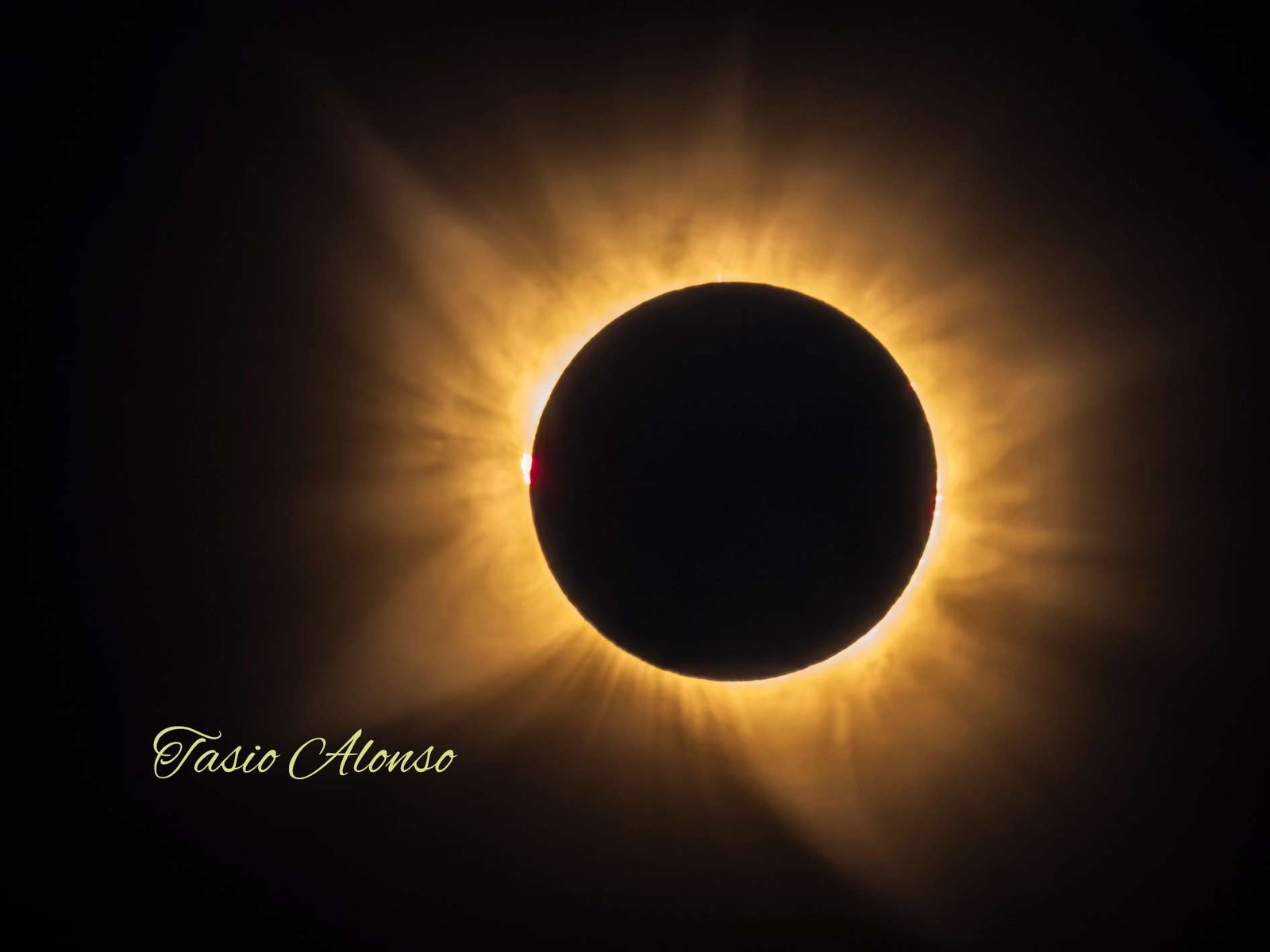
Already happened: at sunset, in northern Spain. See how Tasio Alonso saw it from the Sierra de Albarracín (in Spanish).
2026 · 2027 · 2028
Three solar eclipses in three years, and the best is yet to come: on August 2, 2027, the Moon’s shadow sweeps across southern Spain in mid-morning, with up to 4 min 51 s of totality. It’s less than a year away, and places to stay inside the path are already selling out.
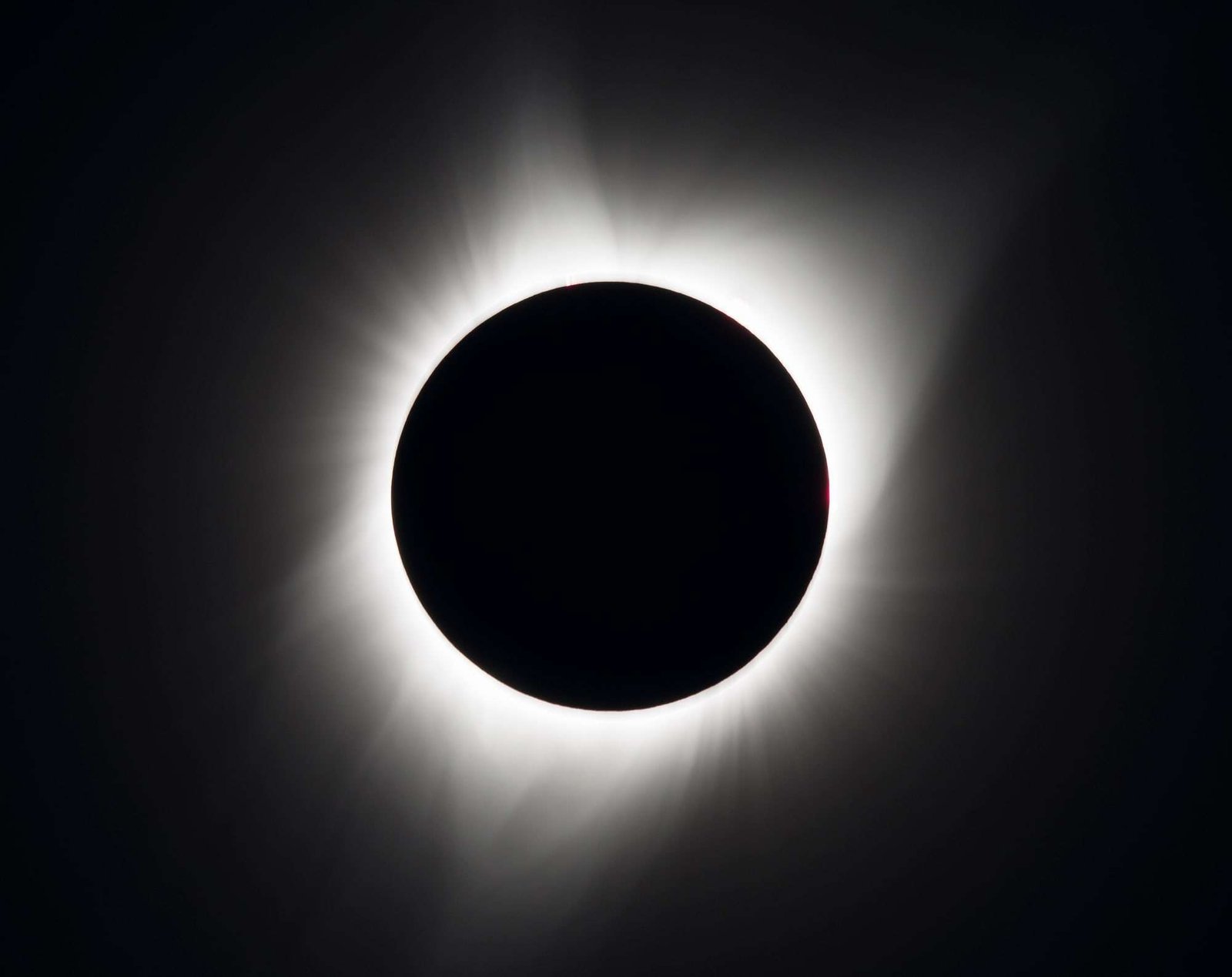
As of November 2026, places to stay inside the path of totality are already selling out, and there are fewer every month. A total eclipse draws people from all over the world, this one falls in the peak August season and on a Monday, so the weekend before will be packed.
Already happened: at sunset, in northern Spain. See how Tasio Alonso saw it from the Sierra de Albarracín (in Spanish).
The big one. Mid-morning, in the south: 4 min 41 s in Tarifa, 4 min 51 s in Ceuta and totality in Cadiz, Malaga, Motril and Melilla. It’s one of the longest of the century.
The “ring of fire”, at sunset: the Moon doesn’t cover the whole Sun and leaves a ring, setting in the west over Seville, Andalusia and eastern Spain. What time in each city.
The path of totality crosses southern Spain from west to east. By area, what matters most when you choose: how long totality lasts, how many mornings in those two weeks were clear over the last 20 years, and how you get there.
| Area | Totality | Clear mornings | Airports | What it’s like |
|---|---|---|---|---|
| The Strait of Gibraltar Tarifa, Algeciras | 4 min 26 s – 4 min 41 s | 62% – 70% | Gibraltar, Malaga and Jerez | The longest totality on the Spanish mainland. Wind, kitesurfing and views of Africa. It will draw the biggest crowds. |
| The Cadiz coast Barbate, Vejer de la Frontera, Conil de la Frontera, Cadiz, Jerez de la Frontera | 1 min 35 s – 4 min 18 s | 69% – 81% | Jerez and Seville | Long beaches, white villages, fried fish and sherry from Jerez. More totality to the south, clearer skies around the bay. |
| The Costa del Sol Estepona, Marbella, Malaga, Nerja | 1 min 01 s – 3 min 39 s | 76% – 83% | Malaga | The easiest to reach and to find a bed: an airport, high-speed trains and thousands of rooms. More totality to the west. |
| The Ronda mountains Ronda | 1 min 17 s | 84% | Malaga and Seville | The clearest skies in the path, more than 700 m (2,300 ft) up. A short totality: it sits by the edge. |
| The Costa Tropical and Almeria Motril | 1 min 32 s – 2 min 18 s | 80% | Granada and Almeria | The Alhambra an hour away, coves and Cabo de Gata Natural Park. From a minute and a half to just over two minutes of totality. |
| Ceuta and Melilla Ceuta, Melilla | 4 min 40 s – 4 min 51 s | 57% – 61% | Melilla; Ceuta by ferry from Algeciras | The longest totalities in Spain, almost five minutes. Cloudier mornings than on the mainland. |
Clear mornings: less than 20% cloud cover at 10 and 11 a.m., July 26 to August 9, 2006 to 2025 (Copernicus ERA5 reanalysis, through Open-Meteo’s historical API). Places just outside the path, like Seville, Granada or Almeria, have their own page too.
Every city: Tarifa, Cadiz, Barbate, Malaga, Marbella, Ceuta, Seville, Madrid, Conil de la Frontera, Vejer de la Frontera, Algeciras, Jerez de la Frontera, Estepona, Ronda, Nerja, Motril, Melilla, Granada, Almeria, Cordoba.
Malaga has the airport with the most international flights in the area, and it’s inside the path. Seville, Jerez, Granada, Almeria and Gibraltar are close by. By train, high-speed AVE services run from Madrid to Malaga and Seville, and there are trains to Cadiz and Algeciras. Ceuta is a ferry ride from Algeciras, and Melilla is reached by plane or by ferry from Malaga, Almeria or Motril. If you’re renting a car, book that now too.
Get to your spot the evening before or before dawn: that morning, the coastal roads will be busy. Check the forecast in the days before and pick between your spot and your plan B the evening before. The eclipse starts around 9:40 a.m. and totality arrives around 10:45; afterwards, don’t rush back: the roads will be worse than on the way in.
It’s hot: at eclipse time it’s still pleasant, but in the afternoon inland it can go above 40 °C (104 °F). Bring water, a hat, sunscreen and some shade. During totality the temperature drops a few degrees, and you’ll feel it.
Spain is one of the most visited countries in the world, and the path crosses the best of Andalusia. Within an hour or two you have the Alhambra in Granada, the Mosque-Cathedral of Cordoba and Seville’s Cathedral and Alcázar, all World Heritage Sites; the white villages of Cadiz and the Ronda mountains; hundreds of miles of beaches; and food you enjoy standing at the bar: tapas, fried fish, Iberian ham, gazpacho and sherry from Jerez. Alhambra tickets sell out weeks ahead: if you’re going, book them when you book your stay.
Certified glasses for every partial phase; without them only during totality. Never binoculars, a telescope or a camera without a solar filter on the front. All of it on the 2027 eclipse page, and the spoken countdown for your exact spot in «Your eclipse».
Yes. The path of totality crosses southern Spain in mid-morning, with the Sun high in the sky and almost five minutes of totality in Ceuta and Melilla and 4 min 41 s in Tarifa. In early August most mornings are clear, and the area has international airports, high-speed trains and thousands of places to stay.
It depends on what matters more to you: duration or weather. The Strait (Tarifa, Algeciras) and Ceuta have the longest totality, but more mornings with clouds and levante wind. The western Costa del Sol (Estepona, Marbella) and the Bay of Cadiz get a little less totality and some of the clearest skies. The smart move: pick an area and have a plan B an hour away.
Now. As of November 2026, places to stay inside the path are already selling out. Book now with free cancellation, even if you change plans later, and if you can’t find anything, look at campsites and RV areas.
Dry and hot. At eclipse time, around 10:45 a.m., it’s still bearable, but in the afternoon inland it can go above 40 °C (104 °F). On the Strait coast, the levante wind and low morning clouds are the main risk.
The total eclipse of August 12, 2026 has already happened, at sunset, in the north. Still to come: the total eclipse of August 2, 2027, in mid-morning, in the south, and the annular eclipse of January 26, 2028, with the ring of fire setting in the west over Andalusia and eastern Spain.